 Qtrends
China-US tensions: tech blacklists, biotech, and space rivalry
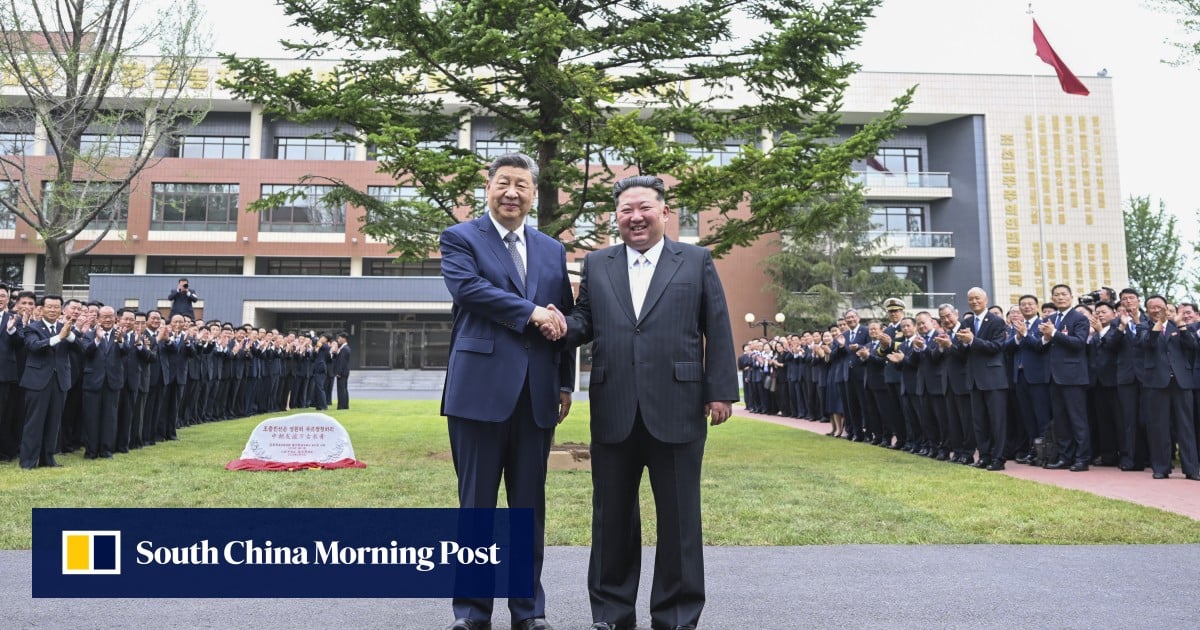 Recent SCMP reporting highlights multiple fronts in China-US competition: President Xi addressed North Korean military ties while the US blacklisted additional Chinese tech firms. Chinese biotech companies insist their global expansion is 'irreversible' despite American barriers. Meanwhile, Chinese insurers are stepping in to underwrite rocket and satellite risks, turning space insurance into a new dimension of the bilateral rivalry.
Sources:
 SpaceX has officially set its IPO share price at $135, creating the largest public offering in history. However, the $1.75 trillion valuation faces pushback from residents near xAI data centers and skepticism from Asian markets. Chinese AI companies are preparing to compete as SpaceX and US rivals gear up for a wave of tech IPOs.
.jpg) Apple's camera chief believes AI will give users 'superpowers' through photography enhancements, but the company is notably avoiding hype around agentic AI. Apple has explicitly ruled out Siri AI acting as a romantic partner, drawing a clear line on AI's role in personal relationships. The approach reflects a deliberate strategy of incremental AI integration rather than sweeping transformation.
Apple's camera chief believes AI will give users 'superpowers' through photography enhancements, but the company is notably avoiding hype around agentic AI. Apple has explicitly ruled out Siri AI acting as a romantic partner, drawing a clear line on AI's role in personal relationships. The approach reflects a deliberate strategy of incremental AI integration rather than sweeping transformation. The emerging trend of AI 'self-evolution' is adding a new dimension to the China-US technology conflict. Chinese AI labs have unveiled models that now closely trail US counterparts from OpenAI and Anthropic in capabilities. Experts warn that while China leads in everyday AI applications, many Chinese AI firms are overvalued. Separately, TCS and Opendoor are raising concerns about AI's impact on India's technology jobs.
 AI continues to find practical applications across healthcare, immersive experiences, and everyday technology. China Daily reports on AI's role in elder care and personalized immersive experiences. Meanwhile, MIT Technology Review offers accessible guides to understanding the current state of AI, and Ars Technica notes that not everything new in macOS 27 is AI-driven.