 Qtrends
Huawei claims chip breakthrough under US sanctions
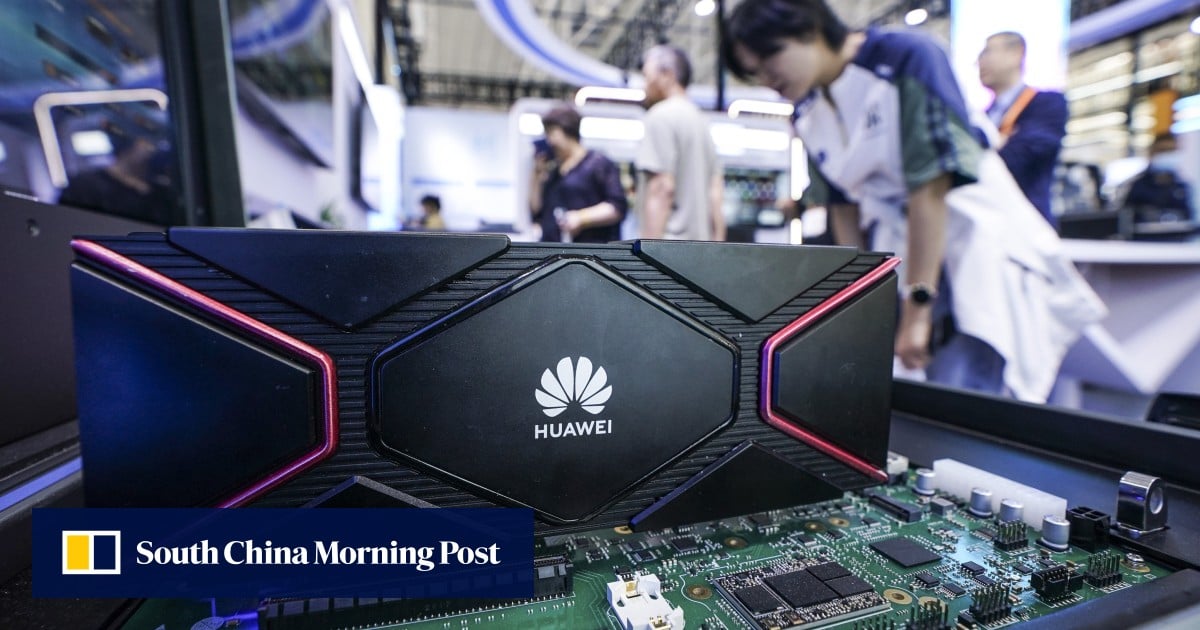 Huawei has unveiled plans for a 1.4nm-equivalent chip target despite ongoing US export restrictions. The company's chairman thanked the US for sanctions, stating they accelerated China's semiconductor self-sufficiency and gave rise to what analysts are calling 'Her's Law.' The news has sparked debate over whether Huawei's claims represent a genuine breakthrough or strategic hype, drawing attention from SCMP, China Daily, Tom's Hardware, and Nikkei Tech.
 Cognition CEO Scott Wu argued that AI coding agents should not replace human developers, pushing back against fears of widespread automation in the software industry. MIT Technology Review offered a reality check on AI job displacement hysteria, while Google I/O demonstrated a shifting approach to AI-driven scientific discovery. The discussion reflects a broader reassessment of AI's role in the workplace as capabilities rapidly advance.
 Blue Origin's New Glenn rocket exploded during a test at its Florida facility, producing a massive fireball that has been described as a catastrophic failure for the company. The explosion not only deals a severe setback to Blue Origin's launch ambitions but also threatens NASA's moon mission schedule, as the rocket was expected to play a role in lunar payload deliveries. Ars Technica, Engadget, TechCrunch, and Scientific American have covered the incident in detail.