 Qtrends
Acer unveils gaming handheld, 1000Hz monitor and Ryzen 9 laptop
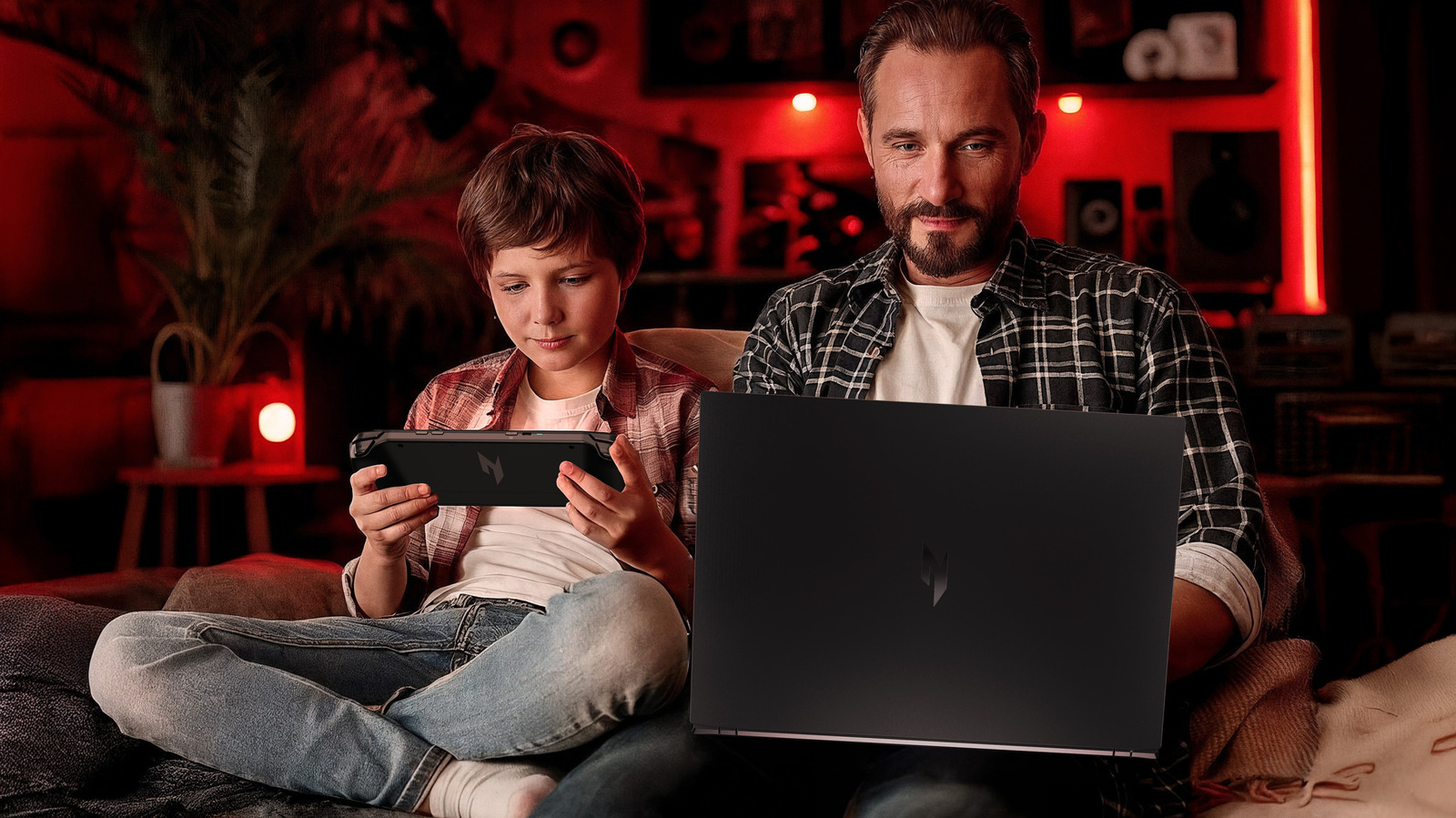 Acer announced multiple new gaming products at Computex, including a handheld companion device for its gaming PCs, a Predator monitor reaching an unprecedented 1000Hz refresh rate, a budget laptop with Qualcomm's Snapdragon C chip, and the first laptop powered by the Ryzen 9 9955X3D processor. The lineup targets gamers across price segments with cutting-edge display and processor technology.
Sources:
Acer unveils first Ryzen 9 9955X3D gaming laptoppublished29 May 26
(Tom's Hardware)
 Blue Origin's New Glenn rocket suffered a catastrophic explosion during testing at Cape Canaveral, generating a massive fireball on the launchpad. The failure deals a severe blow to Blue Origin's ambitions and threatens NASA moon missions that depended on the heavy-lift vehicle. Experts describe the incident as one of the most significant launch-site failures in recent history.
 Huawei has announced plans to produce 1.4nm-equivalent chips despite ongoing US export restrictions, touting a new scaling theory dubbed 'Her's Law.' The claim has drawn skepticism from industry analysts who question whether the Chinese tech giant can achieve such advanced process nodes without access to EUV lithography equipment. The debate reflects the intensifying tech race between the US and China.
 Amazon unveiled a new 'Resilient Network Graphs' architecture for data centers that cuts hardware requirements by 69% while boosting throughput by 33%. Foxconn announced it will begin shipping next-generation optical interconnect technology for AI data centers. Meanwhile, Scientific American explores the possibility of distributed AI computing at the residential edge.
 Multiple outlets are pushing back against AI hype this week. WIRED reported on a controversial incident where an author promoting an AI-written book about the 'Future of Truth' struggled under questioning. MIT Review published several pieces examining inflated AI job displacement claims, the shifting narrative at Google I/O on AI-driven science, and a broader 'AI Hype Index' noting public backlash during graduation season.