 Qtrends
Google engineer charged with insider trading on Polymarket
 A longtime Google security engineer was charged in New York for allegedly using internal company data to make $1.2 million in bets on the prediction market Polymarket. The case marks one of the first major insider trading prosecutions involving prediction markets and cryptocurrency. The engineer faces federal charges for breaking securities laws by trading on confidential information.
Sources:
 Google's AI systems continue to struggle with basic spelling, including the company's own name, highlighting persistent limitations in large language models. Meanwhile, former Google and Apple researchers launched a startup to build feedback loops for AI systems. The Occupy Wall Street co-founder also released an AI app aimed at helping activists access computing power, reflecting a broadening of AI use cases beyond big tech.
 Alibaba's AI model has surpassed Google and OpenAI in global coding benchmark rankings, marking a significant achievement for Chinese AI development. Separately, SoftBank has launched a homegrown AI project that brings together top Japanese manufacturers. AI capabilities are also making an increasing impact on the global smartphone market.
 Peking University has unveiled a new chip design software tool compatible with Huawei's LogicFolding architecture, aimed at boosting the company's chip ambitions. Huawei simultaneously announced a 1.4nm-equivalent chip target despite ongoing US export restrictions. These developments highlight China's push to achieve semiconductor self-sufficiency through innovative design approaches.
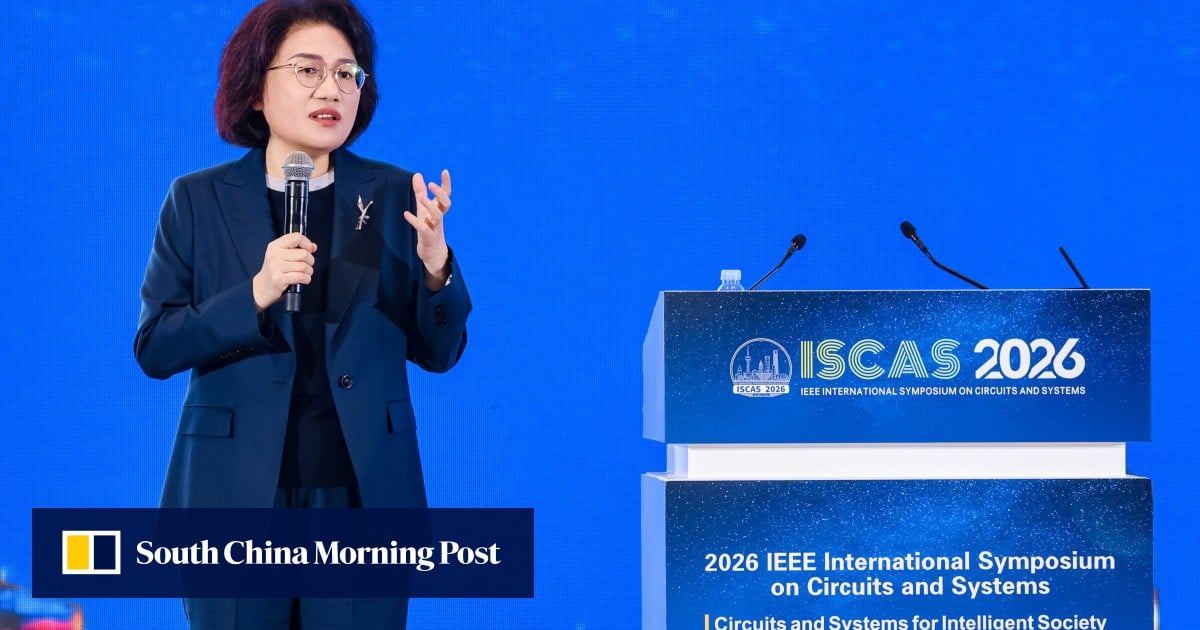 He Tingbo, Huawei's semiconductor chief and chair of its Scientist Committee, has taken center stage in the company's push to rewrite its semiconductor playbook. In a Shanghai presentation, she emphasized shifting the conversation from what Huawei cannot buy to what it can still build. Her leadership underscores Huawei's determination to overcome US sanctions through domestic innovation.